
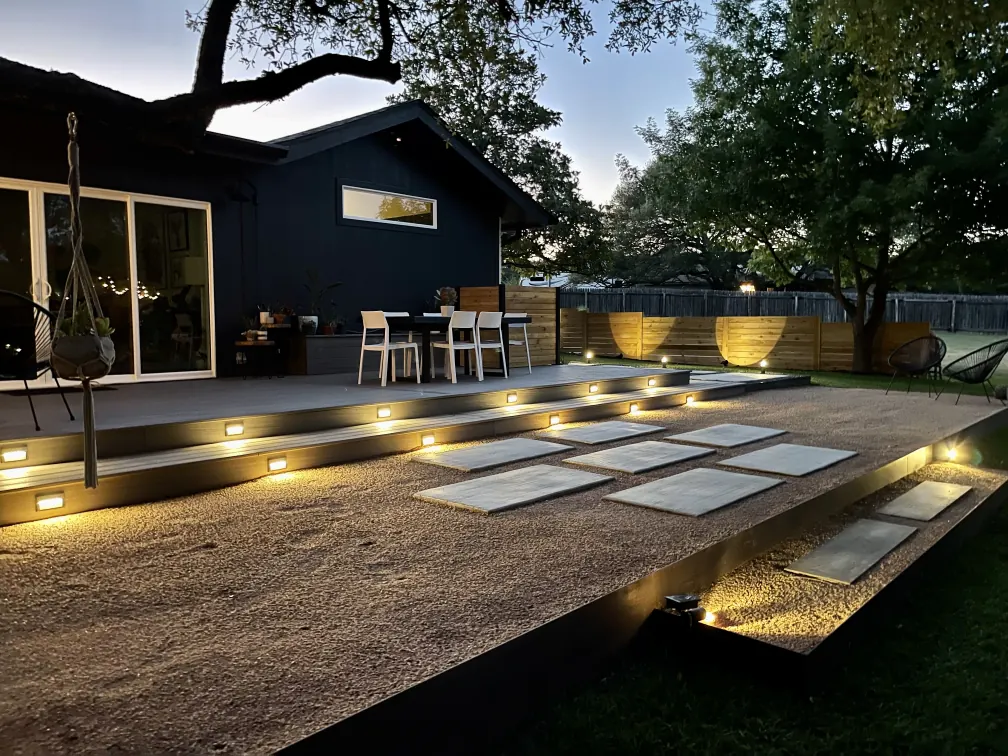
If you’re an Austin homeowner looking to upgrade your outdoor space, understanding the difference between hardscaping and landscaping is crucial. Outside of the industry, the terms are often used interchangeably, but they represent distinct aspects of outdoor design.
Both play vital roles in creating a beautiful, functional, and inviting space, but knowing the difference can help you articulate your vision and make informed decisions throughout your project.
What is hardscaping?
Hardscaping refers to the non-living elements incorporated into your outdoor space. Think of it as the “hard” structural features that provide the foundation for your landscape design. Common hardscaping elements include:
- Patios: These paved areas serve as outdoor living spaces for relaxation, dining, and entertaining.
- Walkways: Paths and walkways guide foot traffic, connect different areas of your yard, and add visual interest.
- Retaining walls: These structures provide support for sloped terrain, prevent erosion, and create level areas for planting or building.
- Decks: Elevated platforms made of wood or composite materials expand your living space and provide a vantage point for enjoying your yard.
- Outdoor kitchens: Bring the culinary experience outdoors with a fully equipped outdoor kitchen featuring grills, countertops, and appliances.
- Fire pits and fireplaces: Create a cozy gathering spot for warmth, ambiance, and socializing.
- Water features: Add tranquility and visual appeal with ponds, waterfalls, and fountains.
What is landscaping?
Landscaping encompasses the living elements of your outdoor design, focusing on the softscape. It involves the art and science of cultivating and arranging plants to create a beautiful and harmonious environment. Key landscaping elements include:
- Trees: Provide shade, privacy, and a sense of grandeur to your landscape.
- Shrubs: Add structure, texture, and color to your garden beds.
- Flowers: Bring vibrant colors and seasonal interest to your yard.
- Groundcover: Fills in bare spots, suppresses weeds, and adds texture.
- Turfgrass: Creates a lush, green lawn for recreation and aesthetic appeal.
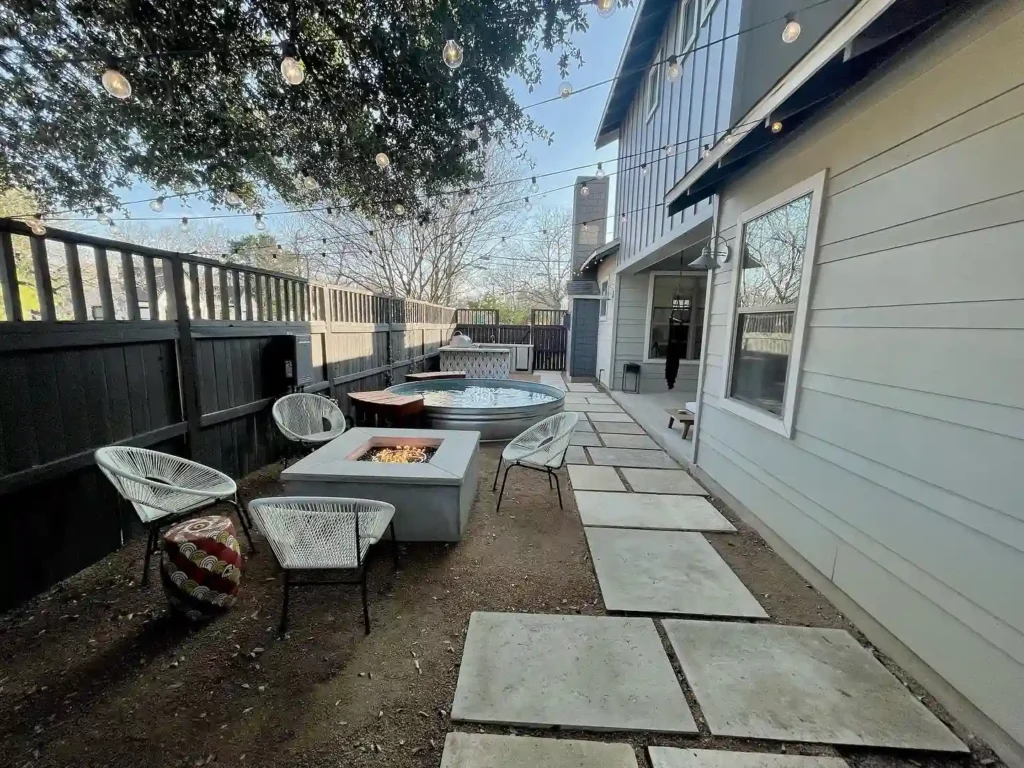
The interplay of hardscaping and landscaping
While distinct, hardscaping and landscaping are interconnected and work together to create a balanced and harmonious outdoor space. Hardscaping provides the structure and foundation, while landscaping adds life, color, and texture.
Think of it this way: hardscaping creates the “bones” of your outdoor space, while landscaping provides the “flesh.” A well-designed landscape seamlessly integrates both elements, creating a cohesive and visually appealing environment.
Benefits of hardscaping vs. landscaping
To add more to the discussion of how hardscaping and landscaping work together, they both offer their own unique benefits, and including both in your outdoor space allows you to take advantage of both.
Benefits of hardscaping
- Increased functionality: Hardscaping elements like patios, walkways, and decks expand your usable living space and provide areas for specific activities.
- Enhanced aesthetics: Well-designed hardscaping adds visual interest, defines spaces, and creates focal points in your yard.
- Improved property value: Hardscaping features can significantly increase the value of your home and enhance its curb appeal.
- Erosion control: Retaining walls and other hardscaping elements help prevent soil erosion and protect your property from water damage. This is particularly useful in areas like Austin, Texas, where the terrain can be uneven and hilly in areas.
- Low maintenance: Many hardscaping materials require minimal upkeep, reducing the time and effort spent on yard work.
Benefits of landscaping
- Natural beauty: Landscaping brings life, color, and texture to your outdoor space, creating a vibrant and inviting environment.
- Environmental benefits: Plants help purify the air, reduce noise pollution, and provide habitat for wildlife.
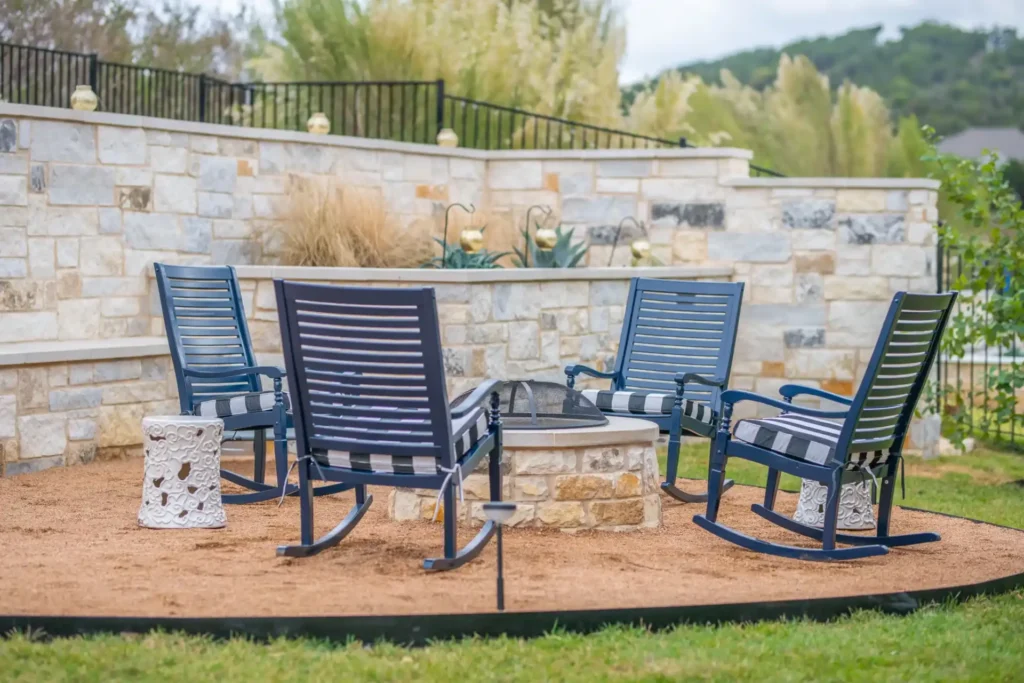
Choosing the right balance
The ideal balance of hardscaping and landscaping depends on your individual needs, preferences, and the characteristics of your property. Consider factors such as:
- Your lifestyle – do you enjoy entertaining guests, relaxing outdoors, or gardening?
- Your budget – hardscaping projects can be more expensive upfront, while landscaping costs may be ongoing.
- Your property – the size, slope, and soil conditions of your yard will influence your design choices.
- Your climate – choose plants that thrive in your local climate and require minimal watering. J&L Hardscapes can work with you to select the plants and flowers that will suit your preferences, but also thrive in Central Texas weather conditions and climate.
Work with J&L Hardscapes on your next project
If you’re feeling overwhelmed by the complexities of hardscaping and landscaping, consider working with J&L Hardscapes. Not only are we expert masons and hardscapers, we also offer professional landscape design services that merge the best parts of hardscaping and landscaping to create stunning outdoor spaces.Our team of experts can guide you through the entire process, from concept to completion, ensuring a beautiful and functional outdoor space that you’ll enjoy for years to come. Contact us today to get started.