
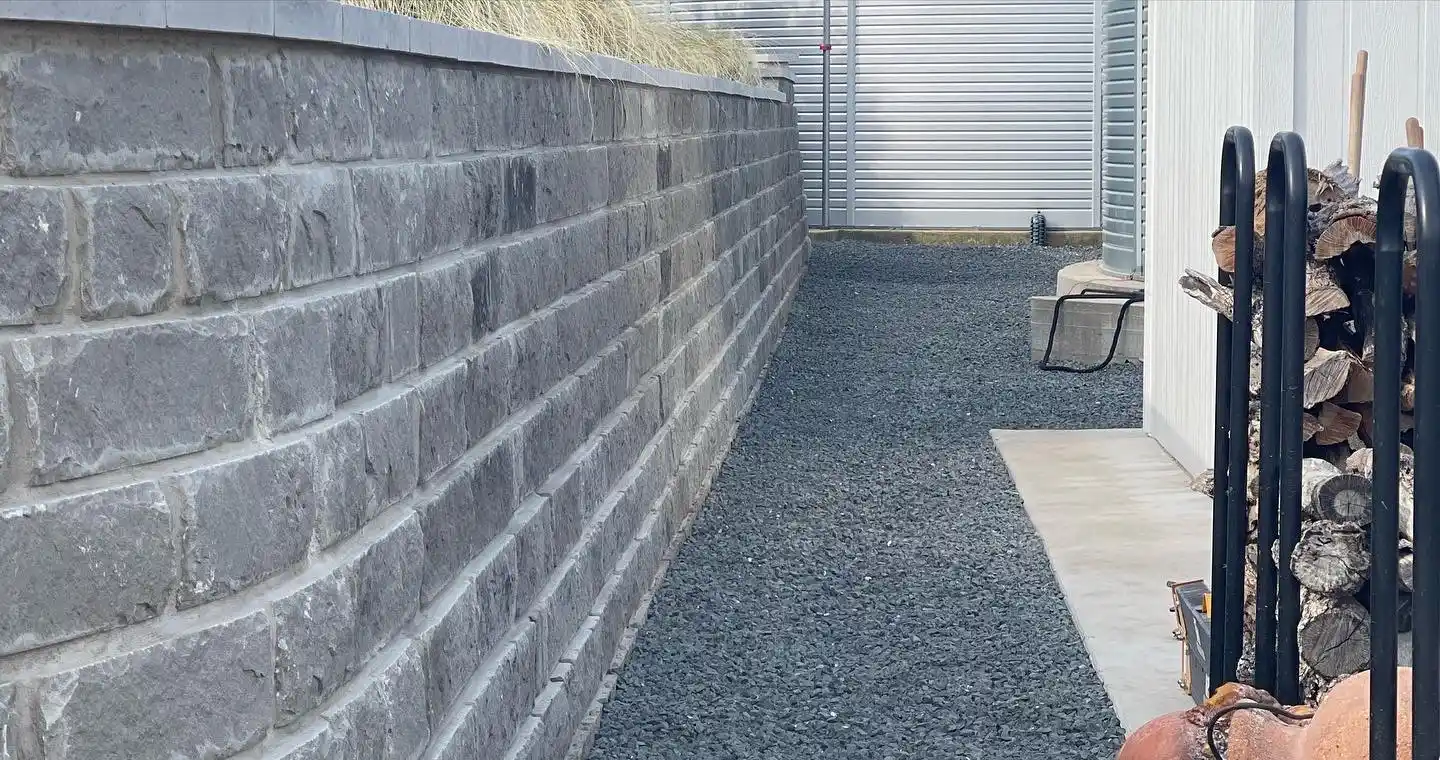
When you start planning a retaining wall, the material you choose shapes nearly everything that follows, from how the finished wall looks to how long it takes to build. Material is also one of the biggest factors in retaining wall cost in Austin, so it helps to understand your options before you request an estimate.
J&L Hardscapes builds retaining walls in three systems: natural limestone, reinforced double CMU, and steel. This guide explains what you’re paying for with each one and walks through common site situations to show where each system fits best. With that information in hand, you can go into your consultation with a clear sense of which direction suits your property and your budget.
What You’re Paying For in Each System
J&L quotes every retaining wall as a complete project, because site conditions, wall size, and material choice all affect the final number. Even so, each system puts its cost in a different place, and knowing where that investment goes makes it easier to compare your options. Wall height, length, drainage, and site access also affect every estimate. Our retaining wall cost guide covers those factors in detail, along with starting figures by wall size.
Natural Limestone
Natural limestone is the basis for J&L’s published pricing, and an average-size limestone wall typically runs $20,000 to $35,000. A large share of that investment goes into skilled labor. Our limestone walls are built from 6×6 limestone block set by hand with mortar joints, which takes an experienced mason and a longer installation timeline than the other two systems.
In return, you get a wall made from the same Central Texas stone found throughout the surrounding landscape, with excellent longevity when it’s built over an engineered footing and drainage system. Limestone is a natural fit for Hill Country properties, accent walls, and terraced grades, and it tends to look more established the longer it’s in the ground.
Reinforced Double CMU
A double CMU wall’s cost comes from two parts: the structure and the finish. The engineered core, built with steel reinforcement, grout-filled cells, and a poured concrete footing, provides the strength and makes load capacity easier to calculate. That makes this system well suited to taller walls and walls holding back heavier loads.
The facade you choose, such as limestone veneer or stucco, affects the final price. A full natural stone facade with a Lueders limestone cap sits at the premium end. Because the facade carries the wall’s appearance, it’s worth weighing both your design goals and your budget when choosing a finish.
Steel
Steel walls use sheet piling or soldier piles to hold back soil, and J&L’s steel walls price similarly to limestone. The installation is efficient, which can help on projects with a tight schedule. Steel is a strong option for tight lots, steep drop-offs, and modern designs.
Two things to plan for are the protective coating or finish exposed steel needs to hold up against Austin’s humidity and moisture changes, and the fact that our steel walls are available up to 4 feet tall. For a deeper look at how the three systems differ structurally, see our guide to limestone, double CMU, and steel retaining walls.
Four Common Austin Sites and the Walls That Suit Them
Every property is different, but many retaining wall projects fall into a few familiar situations. Here’s how each system tends to fit.
A narrow side yard or tight lot with a steep drop. When there isn’t room for a wide masonry footing, steel is often the practical choice. It holds back significant soil pressure on a slim profile, and it prices similarly to limestone. If the wall needs to be taller than 4 feet, we’ll walk through the other systems with you during your site visit.
A tall wall holding back a large amount of soil. Taller walls and heavier loads benefit from the engineered consistency of reinforced double CMU, since the steel reinforcement and grout-filled cells are built to precise specifications. From there, you can choose a facade that balances appearance and budget, whether that’s a stucco finish or a full natural stone facade with a Lueders limestone cap.
A low wall or terraced grade in a natural setting. Shorter accent walls and terraces are a great place for natural limestone. On a smaller wall, the labor involved in hand-set stone has less room to grow, and the finished wall blends naturally into the surrounding Hill Country landscape.
A modern home with clean lines. Steel’s slim, contemporary profile pairs well with modern design on walls up to 4 feet tall. For a taller wall with a similarly clean look, a reinforced double CMU wall with a stucco facade is worth considering.
In every scenario, soil and drainage play a major role in how the wall performs. J&L evaluates both on every retaining wall project before recommending a system.
Questions to Ask About Materials During Your Estimate
Once you’ve narrowed your options, your site visit is a good time to talk through how each system would work on your property. A few questions can help you compare them with confidence:
- Which system would you recommend for my slope, soil, and drainage, and why?
- How tall will my wall need to be, and does that height rule any systems in or out?
- If I choose a reinforced double CMU wall, which facade options fit my budget and design goals?
- Would it make sense to use more than one system on different parts of my property?
- How would the installation timeline differ between the systems I’m considering?
Clear answers to these questions help you see how each option affects your estimate, so you can choose a wall that fits both your site and your budget.
How J&L Hardscapes Handles Retaining Wall Installation in Austin
J&L Hardscapes builds limestone, reinforced double CMU, and steel retaining walls for homeowners throughout Austin, Bee Cave, Cedar Park, Dripping Springs, Round Rock, and the surrounding Hill Country communities. Every project includes a site visit where we assess your slope, soil, and drainage needs, and every wall we build includes an engineered footing and drainage system.
After the site visit, you’ll receive a clear, detailed estimate for your complete project, so you know what to expect before work begins. You can learn more about our approach to retaining wall installation in Austin.
Frequently Asked Questions
Why doesn’t J&L price retaining walls per square foot?
Every wall is quoted as a complete project. Site conditions, wall size, and material choice affect cost more than any single unit price can capture, so a project-based estimate gives you a more accurate number for your property.
How tall can a steel retaining wall be?
J&L’s steel retaining walls are available up to 4 feet tall. For taller walls, natural limestone or reinforced double CMU may be a better fit.
Can I get a stone look on a CMU wall?
Yes. A reinforced double CMU wall can be finished with limestone veneer, and a full natural stone facade with a Lueders limestone cap is one of the premium finishes we offer.
Which type of wall takes the longest to install?
Hand-set limestone generally has the longest installation timeline because each stone is set by a skilled mason. A reinforced double CMU core goes up more quickly than a comparable all-stone wall, and steel sections also install efficiently.
Get a Price Built Around Your Wall
Each of these materials has a place on Austin properties, and the right choice depends on your slope, your style, and your budget. Understanding what you’re paying for with each system is the first step toward a wall that fits your yard and your plans.
When you’re ready to explore options for your property, contact J&L Hardscapes to schedule a consultation. We’ll walk your site with you, talk through the systems that fit, and put together an estimate for your retaining wall project.